
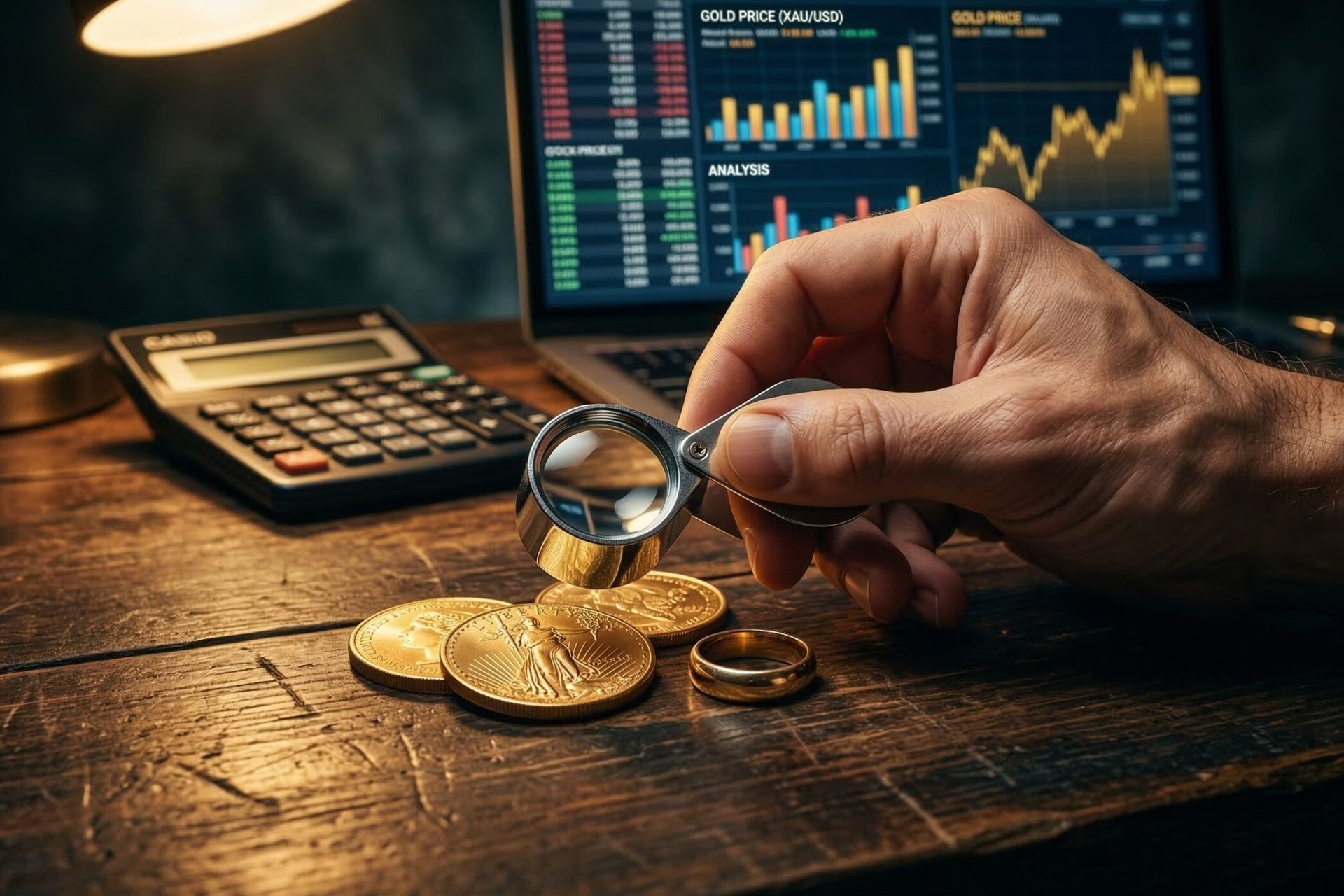

Right now, gold is trading near record highs. It recently surged past $5,000 an ounce.
That means if you have old jewelry, coins, or bullion sitting in a drawer, you’re probably sitting on a serious pile of cash. If you’re wondering how to turn your gold jewelry into cash while prices are high, you aren’t alone.
But here’s the ugly truth. The higher the price of gold goes, the more the scammers and bottom-feeders come out of the woodwork.
The FBI has warned people about gold scams where sophisticated operations convince you to convert your cash into precious metals, only to send a courier to your front door to steal it. If you don’t know exactly what you’re doing, you’re going to get taken for a ride.
You can’t just walk into the first place with a neon “We Buy Gold” sign and expect a fair deal. You need a strategy. Here are three places you should consider selling your gold, and three you need to avoid like the plague.
Where you should go to sell your gold
1. Established local coin shops: If you have gold coins or standard bullion, reputable local coin dealers are often your best bet. They operate on tight, known margins based on the daily spot price of gold. Because they have a physical storefront in your community, they rely heavily on reputation.
You can look these shops up on the Better Business Bureau, read local reviews, and get a quote face-to-face. Plus, you walk out with money in your hand the same day.
2. Major online bullion dealers: If you’re selling recognized gold bars or popular coins like American Eagles, online dealers like APMEX or JM Bullion are transparent.
They post their buyback prices right on their websites, so you know exactly what you’re getting before you even put your gold in the mail. It takes a few days to get paid, but you avoid the haggling and get a competitive rate.
3. Professional appraisers or auction houses: If you’re holding antique gold jewelry, rare coins, or designer pieces, don’t sell them for scrap. The historical or collector value is often much higher than the raw metal value.
As a rule for selling your gold jewelry and coins, pay a certified appraiser a flat fee — never a percentage of the item’s value — to tell you what you actually have. If it’s something special, an auction house will get you in front of collectors willing to pay a premium.
Where you shouldn’t go to sell your gold
1. Mail-in cash-for-gold companies: You’ve seen the late-night commercials. They send you a prepaid envelope, you mail off your jewelry, and they send you a check. Don’t do this. Some of these companies are notorious for paying a fraction of what your gold is worth.
Worse, they often employ a ticking-clock tactic where if you don’t reject their lowball offer within a few days, they melt your gold down and the deal is final.
2. Pawn shops: I have nothing against pawn shops for certain transactions, but they’re generally a terrible place to sell gold. These businesses have high overhead and need to make massive profit margins on everything they buy.
They aren’t looking to give you the fair market value of your gold; they’re looking to buy it cheap enough to resell it and keep the lights on. You’ll almost always get a better price at a dedicated coin shop or jeweler.
3. Hotel buyers and pop-up events: Sometimes you’ll see ads for traveling buyers who set up shop in a local hotel conference room for the weekend, offering to buy your gold and silver. Run the other way.
These are often fly-by-night operations. They come into town, rely on high-pressure sales tactics to buy your valuables for pennies on the dollar, and then leave before you realize you’ve been taken. If you realize the next day that you made a mistake, they’re already two states away.
Before you sell a single ounce, know what you have and check the current spot price so you can make the most cash. Always get at least three different quotes. It’s your money. Don’t let someone else walk away with it.
Read the full article here